
One of the first questions people ask before buying an electric vehicle (EV) is, “How long does it take to charge?
The answer isn’t as straightforward as filling a petrol or diesel car. Charging time depends on several factors, including your EV’s battery size, the type of charger you’re using, the battery’s current charge level, and even the weather.
The good news is that charging an EV is becoming faster and more convenient every year as India’s charging infrastructure continues to expand. Whether you charge at home overnight or use a public fast charger during a road trip, there’s a charging option for almost every driving need.
In this guide, we’ll explain how EV charging works, compare charging methods, and help you understand what affects charging time.
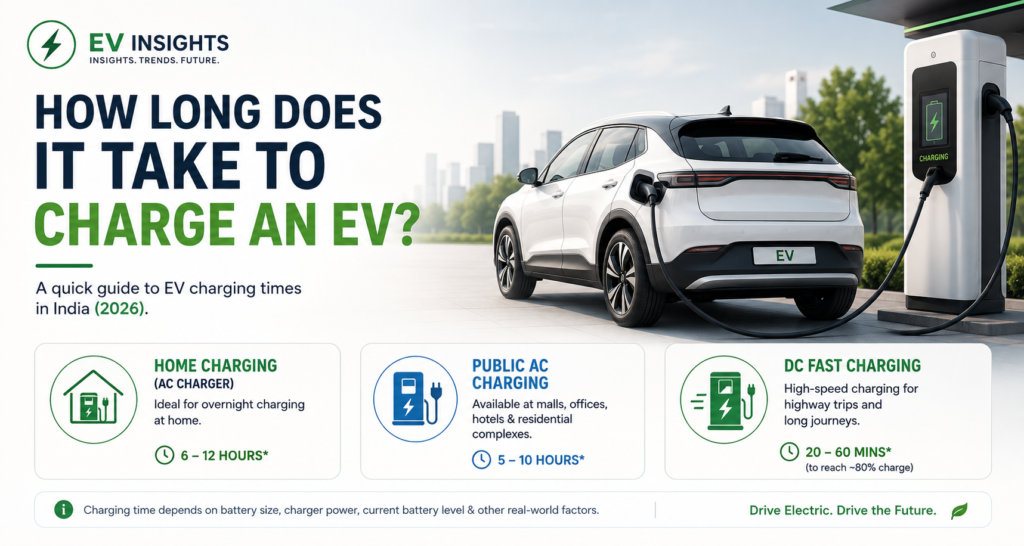
Different Types of EV Chargers
1. Home Charging (AC Charger)
Most EV owners in India charge their cars at home using an AC charger. These chargers are ideal for overnight charging.
Typical power:
- 3.3 kW
- 7.2 kW
- 11 kW
Charging Time:
- Around 6–12 hours depending on the battery size.
Best for:
- Daily commuting
- Overnight charging
2. Public AC Charging
Public AC charging stations are commonly found in shopping malls, offices, hotels, and residential complexes.
Charging Time:
- 5–10 hours
Best for:
- Parking for extended periods.
3. DC Fast Charging
DC Fast Chargers deliver electricity directly to the battery, making charging significantly faster.
Typical Power:
- 30 kW
- 60 kW
- 120 kW
- 150 kW and above
Charging Time:
- 20–60 minutes to reach around 80% charge, depending on the vehicle.
Best for:
- Highway travel
- Long-distance trips
Estimated Charging Times
| Charger Type | Typical Charging Time |
|---|---|
| 3.3 kW Home Charger | 10–15 hours |
| 7.2 kW Home Charger | 6–9 hours |
| 11 kW AC Charger | 4–6 hours |
| 30–60 kW DC Fast Charger | 45–90 minutes |
| 120–150 kW Fast Charger | 20–40 minutes |
Actual charging times vary by battery size, vehicle software, charger output, and battery condition.
What Affects EV Charging Time?
Battery Capacity
A larger battery stores more energy, so it generally takes longer to charge than a smaller one when using the same charger.
Charger Power
A higher-powered charger can deliver energy more quickly, provided the vehicle is capable of accepting that charging speed.
State of Charge
Charging from 10% to 80% is usually much faster than charging from 80% to 100%. Many EVs automatically reduce charging speed at higher battery levels to help protect battery health.
Weather Conditions
Extreme heat or cold can slow charging because the battery management system may limit charging rates to maintain safe operating temperatures.
Vehicle Charging Limits
Even if a charger is capable of delivering very high power, the EV will only charge as fast as its onboard hardware allows.
Why Most EV Owners Don’t Wait for a Full Charge
Unlike petrol cars, EV owners rarely wait at a charging station until the battery reaches 100%.
Many drivers:
- Charge overnight at home.
- Top up during shopping or work.
- Use fast chargers mainly on longer journeys.
This means charging often fits naturally into daily routines rather than becoming a separate task.
Tips to Reduce Charging Time
- Install a dedicated home charger if possible.
- Use DC fast chargers during road trips.
- Charge between 20% and 80% for everyday driving, unless you need maximum range.
- Pre-condition the battery (if your EV supports it) before arriving at a fast charger.
- Choose charging stations that match your vehicle’s maximum charging capability.
Is EV Charging Really Convenient?
For most urban drivers, yes. If you have access to home or workplace charging, your EV can often be fully charged while you’re sleeping or working.
Public charging networks are also expanding across India, making long-distance travel more practical than ever. As battery technology and charging infrastructure continue to improve, charging times are expected to become even shorter.
Final Thoughts
The time it takes to charge an EV depends on your vehicle, charger, and charging habits. While home charging may take several hours, it is typically done overnight. Fast chargers can provide a substantial recharge in under an hour, making them ideal for travel.
As India’s EV ecosystem grows, charging is becoming more accessible, faster, and easier to integrate into everyday life. Understanding the different charging options can help you choose the approach that best suits your lifestyle and driving needs.
SEO FAQs
Q. How long does it take to charge an electric car in India?
Most electric cars take between 6 and 12 hours on a home AC charger, while DC fast chargers can recharge many EVs to around 80% in approximately 20–60 minutes.
Q. Can I charge my EV overnight?
Yes. Overnight charging with a home AC charger is the most common and convenient option for daily use.
Q. Does fast charging damage the battery?
Occasional fast charging is generally safe, but frequent reliance on DC fast charging may contribute to faster battery wear over the long term. Following the manufacturer’s recommendations helps maintain battery health.
Q. Is it cheaper to charge at home or at a public charging station?
Charging at home is usually more cost-effective because residential electricity tariffs are often lower than public charging rates.
Estimated word count: ~1,450 words, making it suitable as a pillar-style SEO article for an EV-focused website.
Leave a Reply